Ebook Download East West Street: On the Origins of Genocide and Crimes Against Humanity, by Philippe Sands
Excellent East West Street: On The Origins Of Genocide And Crimes Against Humanity, By Philippe Sands publication is constantly being the very best friend for spending little time in your office, night time, bus, and all over. It will be an excellent way to just look, open, as well as read the book East West Street: On The Origins Of Genocide And Crimes Against Humanity, By Philippe Sands while because time. As understood, experience as well as skill don't constantly featured the much money to obtain them. Reading this book with the title East West Street: On The Origins Of Genocide And Crimes Against Humanity, By Philippe Sands will certainly let you understand a lot more points.
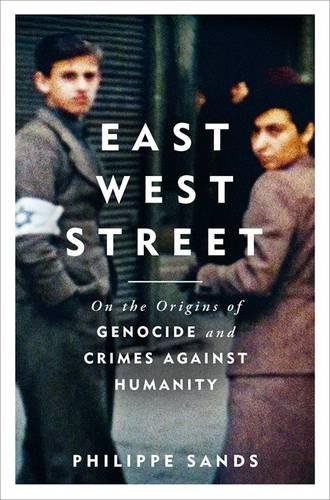
East West Street: On the Origins of Genocide and Crimes Against Humanity, by Philippe Sands

Ebook Download East West Street: On the Origins of Genocide and Crimes Against Humanity, by Philippe Sands
East West Street: On The Origins Of Genocide And Crimes Against Humanity, By Philippe Sands. Is this your extra time? Exactly what will you do after that? Having spare or complimentary time is really fantastic. You can do everything without pressure. Well, we mean you to spare you few time to read this publication East West Street: On The Origins Of Genocide And Crimes Against Humanity, By Philippe Sands This is a god publication to accompany you in this leisure time. You will not be so difficult to recognize something from this book East West Street: On The Origins Of Genocide And Crimes Against Humanity, By Philippe Sands More, it will help you to obtain much better information and also experience. Even you are having the wonderful jobs, reading this e-book East West Street: On The Origins Of Genocide And Crimes Against Humanity, By Philippe Sands will not include your thoughts.
Getting the e-books East West Street: On The Origins Of Genocide And Crimes Against Humanity, By Philippe Sands now is not sort of hard means. You can not just going with book store or collection or borrowing from your pals to review them. This is a quite easy way to specifically get the e-book by online. This on-line publication East West Street: On The Origins Of Genocide And Crimes Against Humanity, By Philippe Sands can be one of the choices to accompany you when having spare time. It will certainly not lose your time. Believe me, the book will show you new thing to check out. Merely invest little time to open this online e-book East West Street: On The Origins Of Genocide And Crimes Against Humanity, By Philippe Sands and also review them wherever you are now.
Sooner you obtain guide East West Street: On The Origins Of Genocide And Crimes Against Humanity, By Philippe Sands, quicker you can appreciate reviewing guide. It will be your count on maintain downloading and install guide East West Street: On The Origins Of Genocide And Crimes Against Humanity, By Philippe Sands in provided link. In this means, you can truly decide that is offered to obtain your personal book online. Right here, be the first to obtain guide entitled East West Street: On The Origins Of Genocide And Crimes Against Humanity, By Philippe Sands and be the initial to recognize exactly how the author indicates the message and also knowledge for you.
It will certainly have no doubt when you are going to choose this publication. This inspiring East West Street: On The Origins Of Genocide And Crimes Against Humanity, By Philippe Sands book can be checked out completely in specific time depending on how often you open and also read them. One to bear in mind is that every book has their very own manufacturing to get by each viewers. So, be the excellent visitor and be a much better person after reading this e-book East West Street: On The Origins Of Genocide And Crimes Against Humanity, By Philippe Sands
When human rights lawyer Philippe Sands received an invitation to deliver a lecture in the western Ukrainian city of Lviv, he began to uncover a series of extraordinary historical coincidences. It set him on a quest that would take him halfway around the world in an exploration of the origins of international law and the pursuit of his own secret family history, beginning and ending with the last day of the Nuremberg Trials.Part historical detective story, part family history, part legal thriller, Philippe Sands guides us between past and present as several interconnected stories unfold in parallel. The first is the hidden story of two Nuremberg prosecutors who discover, only at the end of the trials, that the man they are prosecuting, once Hitler's personal lawyer, may be responsible for the murder of their entire families in Nazi-occupied Poland, in and around Lviv. The two prosecutors, Hersch Lauterpacht and Rafael Lemkin, were remarkable men, whose efforts led to the inclusion of the terms crimes against humanity and genocide in the judgement at Nuremberg, with their different emphasis on the protection of individuals and groups. The defendant was no less compelling a character: Hans Frank, Hitler's personal lawyer, friend of Richard Strauss, collector of paintings by Leonardo da Vinci, and governor-general of Nazi-occupied Poland.A second strand to the book is more personal, as Sands traces the events that overwhelmed his mother's family in Lviv and Vienna during the Second World War and led his grandfather to leave his wife and daughter behind as war came to Europe. At the heart of this book is an equally personal quest to understand the roots of international law and the concepts that have dominated Sands' work as a lawyer. Eventually he finds unexpected answers to his questions about his family in this powerful meditation on the way memory, crime, and guilt leave scars across generations.
- Sales Rank: #4361178 in Books
- Brand: imusti
- Published on: 2016
- Original language: English
- Dimensions: 9.53" h x 1.65" w x 6.38" l, 1.46 pounds
- Binding: Hardcover
- WEIDENFELD NICOLSON
Review
Acclaim for Philippe Sands’
EAST WEST STREET
�
“An indispensable book.”
—Jack Fischel, Hadassah Magazine
�
“Remarkable sleuthing.”
—Christopher R. Browning, The New York Review
�
“An intimate and important tale . . . vivid . . . engaging . . . A kind of mystery-solving journey . . . remarkable.”
—John Tirman, The Washington Post
�
“A tour de force . . . penetrating . . . A pillar of the emerging genre of third-generation investigation into the legacy of the European Jewish apocalypse . . . This is a history that is both personal and universal . . . Equal parts legal scholarship, memoir and multitude of mysteries, told with admirable suspense and elocution . . . Here we find both the detail of concepts and the detail of personal lives and geographies . . . Sands acts as archivist and archaeologist, traveler and historian—but also as horrified observer.”
—Sarah Wildman, Jewish Daily Forward
�
“A monumental and profoundly important book . . . A brilliant account that reads as part history, part human rights theory, and part thriller . . . Sands writes like a skilled archeologist digging into the bloodied soil of Europe . . . A riveting melding of memoir and history . . . A powerful book, exquisitely written and profound in its implications and importance . . . A singular accomplishment . . . An inspirational book that readers will cherish for years to come.”
—Michael N. Dobkowski, Jewish Book Council
�
“Dazzling, shattering.�East West Street is one of the most extraordinary books that I have ever read.”
—Antonia Fraser
�
“A masterpiece that is part detective story and part exploration of family history, memory, crime, guild, loss and law . . . Exceptionally gripping and moving . . . East West Street is described by John Le Carr� as ‘a monumental achievement’ and he is right. It is work of the highest order and it deserves to be as widely read as possible. It is, I reiterate, a masterpiece.”
—Iain Martin, Reaction
�
“Supremely gripping . . . Sands has produced something extraordinary . . . Sands tells it not just as history but as a family memoir, a detective thriller and a meditation on the power of memory . . . Written with novelistic skill, its prose effortlessly poised, its tone perfectly judged, the book teems with life and high drama . . . One of the most gripping and powerful books imaginable.”
—Dominic Sandbrook, The Sunday Times
�
“Remarkable . . . a voyage of discovery . . . a riveting odyssey . . . Sands elicits the most extraordinary revelations from his subjects.”
—Isabel Hull, London Review of Books
�
“Magnificent and compelling . . . Sands has created a masterpiece . . . It should be read by everyone.”
—Marc Mangel, Distinguished Research Professor of Mathematical Biology at University of California, Santa Cruz
�
“A rare and unusual event: a book about international law that makes you want to keep reading.”
—Cullen Murphy, Vanity Fair
�
“Outstanding . . . Consistently intriguing . . . A fusion of personal and professional interest, with Sands delving into his family’s cordoned-off past to unearth concealed truths and trace the circumstances that led to the birth of his chosen field of humanitarian law . . . Powerful and poignant, but also original . . . Ultimately, Sands’s multifaceted book stands triumphantly alone. It even-handedly charts four separate lives and skillfully explores a beleaguered city with blurred borders . . . It amplifies the roar of history, dramatizes the depravity of, and the moral struggle against, what Primo Levi called the “infernal order” that is Nazism . . . It is a fact-finding mission, a gripping courtroom drama, a tale, ultimately and cathartically, of good triumphing over evil. In Sands’s pages, many beautifully adorned with photos, maps, letters—evidence—we see the piece-by-piece reconstruction of a lost world, and the development of ideas that would help safeguard a new one.”
—Malcolm Forbes, New Republic
�
“East West Street is the fascinating story of a distinguished jurist who tries to untangle the secret wartime history of his family, as he masterfully brings to life the riveting legal drama that forced the men who ordered genocide to face justice. His suspenseful investigative memoir breaks new ground on World War II, as he takes readers on a journey across Europe that is rendered in lush and vivid prose.”
—Anne-Marie O'Connor, author of The Lady in Gold
�
“Sands is a fine writer and sets his scenes so compellingly and earnestly that his enterprise succeeds . . . Engrossing, luminous and moving.”
—Samuel Moyn, The Wall Street Journal
�
“A compelling family memoir intersects with the story of the Jewish legal minds who sowed the seeds for human rights law at the Nuremberg trials . . . important and engrossing . . . The surprise is that even when charting the complexities of law, Sands’s writing has the intrigue, verve and material density of a first-rate thriller . . . He can magic whole histories of wartime heroism out of addresses eight decades old. Or, chasing the lead of a faded photograph, he can unearth possible alternate grandparents and illicit liaisons to be verified only by DNA tests . . . Exceptional.”
—Lisa Appignanesi, The Guardian
�
“Sands proceeds in the manner of certain historians . . . he also works in the manner of the author of thrillers . . . In Sands’s history, as in all great novels, we encounter characters who, though seemingly secondary, are essential to the plot . . . And all the while Sands works in the way of artists like Filippo Lippi, who painted himself into the corner of his ‘Coronation of the Virgin’ and ‘The Funeral of Saint Stephen’ . . . The result is a narrative, to my knowledge unprecedented . . . We have in Sands’s East West Street a machine of power and beauty that should not be ignored by anyone in the United States or elsewhere who would believe that there are irreparable crimes whose adjudication should not stop at the border . . . Barack Obama and his successors would be well advised to move to the top of their reading lists this account of the birth, amid the darkest conceivable shadows, of an unprecedented body of rights-based law, whose application has scarcely begun.”
—Bernard-Henri L�vy, New York Times Book Review (cover review)
�
“Vivid and readable . . . East West Street weaves lives together in a kind of collective biography of a generation . . . remarkable . . . compelling . . . moving and powerful.”
—Mark Mazower, Financial Times
�
“A story of heroes and loss . . . An outstanding book; a moving history [that] at times, reads like a detective story . . . Sands’s greatest achievement is the way he moves between his family story and the lives of Lauterpacht and Lemkin and how he brings their complex work to life . . . This is the best kind of intellectual history . . . a clear, astonishing story.”
—David Herman, New Statesman
�
“Gripping, profound and deeply personal . . . Excellent.”
—Mark Harrison, Holocaust Memorial Day Trust
�
“Remarkable . . . vivid . . . complex and gripping . . . East West Street is a fascinating and revealing book, for the things it explains: the origins of laws that changed our world, no less. Thoughtful, and compassionate, and important.”
—Daniel Hahn, The Spectator
�
“Moving and deep . . . an astonishing work in many ways: on the personal level, on the level of coincidence, on the epic level�involving most people on earth, and on the�philosophical and legal level. That Sands managed to pull it off and pull it all together is remarkable. Lemkin and Lauterpacht are drawn with an artist's eye and are indelible—Lauterpacht's reserve juxtaposed against Lemkin's nervousness . . . The issue of the prosecution of genocide versus crimes against humanity is fascinating and was made clear to me for the first time . . . Bravo! . . . A gargantuan�achievement.”
—Jane Alexander
�
“This remarkable book is partly a lawyer's quest to understand the roots of international law (one that is surprisingly fascinating for the non-legal reader) and a riveting family memoir . . . Extraordinary . . . astonishing . . . a considerable feat . . . profoundly moving.”
—Caroline Sanderson, The Bookseller (Book of the Month)
�
“A book like no other I have ever read—unputdownable and unforgettable.”
—Orlando Figes
�
“Beautiful and necessary.”
—A.L. Kennedy
�
“Astonishing and important.”
—Louis Begley
�
“East West Street is a strange and beautiful object: at once a genealogy of international human rights law, and a delicate family portrait . . . Meticulous, moving, compulsive.”
—Adam Thirlwell
�
“This book transcends genre, breaking convention to create something fascinating and engrossing. Sands manages to weave the most personal of stories through the most globally impactful: the inclusion of the term ‘crimes against humanity’ in the judgement at Nuremberg.”
—Steven Cooper of Waterstones, The Bookseller
�
“Engrossing . . . remarkable . . . part family memoir, part biographical essay, part historical exploration . . . A reminder of the incredible riches that are to be found in archives, parish records, attics and old suitcases when there is the energy and persistence to keep digging.”
—Caroline Moorehead, Literary Review
�
“In East West Street, Philippe Sands brings all the power of his formidable intellect, his inquisitive spirit and his emotional imagination to bear on a complicated tangle of personal, legal and European history. In a gripping narrative that is tender yet dispassionate, intensely felt and meticulously researched, Sands uncovers the surprising affinities and divergences among the parallel lives of three men, two celebrated, one unknown, whose struggles, sorrows, accomplishments and defeats, large and small, help us to understand and, more, to�feel�the mittel-European civilization their lives embodied, a whole world that was destroyed and reinvented within the span of a single lifetime.”
—Michael Chabon, author of The Amazing Adventures of Kavalier & Clay
�
“Gripping . . . Sands’s study achieves a balance between the individual and the political that brings the events of the Holocaust into new focus . . . Readers interested in history, political science, and/or religion shouldn’t miss this compelling work with unforgettable characters.”
—Margaret Heller, Library Journal
�
“In a triumph of astonishing research, Sands has brilliantly woven together several family stories which lead to the great denouement at the Nuremberg tribunal. No novel could possibly match such an important work of truth.”
—Antony Beevor (English Military Historian)
�
“An engrossing tale of family secrets and groundbreaking legal precedents . . . a tense, riveting melding of memoir and history . . . From letters, photographs, and deeply revealing interviews, the author portrays Nazi persecutions in shattering detail . . . Vastly important.”
—Kirkus Reviews (Starred Review)
�
“A monumental achievement … a profoundly personal account of the origins of crimes against humanity and genocide, told with love, anger and precision.”
—John le Carr�
About the Author
Philippe Sands is professor of law at University College London and a practicing barrister at Matrix Chambers. He frequently appears before international courts, including the International Criminal Court and the World Court in the Hague, and has been involved in many of the most important cases of recent years, including Pinochet, Congo, Yugoslavia, Rwanda, Iraq, and Guantanamo. His previous books include Lawless World and Torture Team. He is a frequent contributor to the Financial Times, the Guardian, New York Review of Books, and Vanity Fair, makes regular appearances on radio and television, and serves on the boards of English PEN and the Hay Festival.
David Rintoul is a stage and television actor. A former student of the Royal Academy of Dramatic Art in London, he has worked extensively with the Royal National Theatre and the Royal Shakespeare Company. He has also appeared regularly on BBC television, starring as Mr. Darcy in the 1980 adaptation of Pride and Prejudice and as Doctor Finlay in the television series of the same name.
Excerpt. � Reprinted by permission. All rights reserved.
Prologue
An Invitation
Tuesday, October 1, 1946,
Nuremberg’s Palace of Justice
�
A little after three o’clock in the afternoon, the wooden door behind the defendant’s dock slid open and Hans Frank entered court- room 600. He wore a gray suit, a shade that was offset by the white helmets worn by the two somber-faced military guards, his escorts. The hearings had taken a toll on the man who had been Adolf Hitler’s personal lawyer and then personal representative in German-occupied Poland, with his pink cheeks, sharp little nose, and sleeked-back hair. Frank was no longer the slender and swank minister celebrated by his friend Richard Strauss. Indeed, he was in a considerable state of perturbation, so much so that as he entered the room, he turned and faced the wrong direction, showing his back to the judges.
Sitting in the packed courtroom that day was the professor of international law at Cambridge University. Balding and bespectacled, Hersch Lauterpacht perched at the end of a long wooden table, round as an owl, flanked by distinguished colleagues on the British prosecution team. Seated no more than a few feet from Frank, in a trademark black suit, Lauterpacht was the one who came up with the idea of putting the term “crimes against humanity” into the Nuremberg statute, three words to describe the murder of four million Jews and Poles on the territory of Poland. Lauterpacht would come to be recognized as the finest international legal mind of the twen- tieth century and a father of the modern human rights movement, yet his interest in Frank was not just professional. For five years, Frank had been governor of a territory that included the city of Lemberg, where Lauterpacht had a large family, including his parents, a brother and sister, their children. When the trial had opened a year earlier, their fate in the kingdom of Hans Frank was unknown.
Another man with an interest in the trial was not there that day. Rafael Lemkin listened to the judgment on a wireless, from a bed in an American military hospital in Paris. A public prosecutor and then a lawyer in Warsaw, he fled Poland in 1939, when the war broke out, and eventually reached America. There he worked with the trial’s American prosecution team, alongside the British. On that long journey, he carried a number of valises, each crammed with documents, among them many decrees signed by Frank. In studying these materials, Lemkin found a pattern of behavior, to which he gave a label, to describe the crime with which Frank could be charged. He called it “genocide.” Unlike Lauterpacht, with his focus on crimes against humanity, which aimed at the protection of individuals, he was more concerned with the protection of groups. He had worked tirelessly to get the crime of genocide into Frank’s trial, but on this last day of the trial he was too unwell to attend. He too had a personal interest in Frank: he had spent years in Lw�w, and his parents and brother were caught up in the crimes said to have been committed on Frank’s territory.
“Defendant Hans Frank,” the president of the tribunal announced. Frank was about to learn whether he would still be alive at Christmas, in a position to honor the promise he had recently made to his seven-year-old son, that all was fine and he would be home for the holiday.
�
Thursday, October 16, 2014,
Nuremberg’s Palace of Justice
�
Sixty-eight years later I visited courtroom 600 in the company of Hans Frank’s son Niklas, who was a small boy when that promise was made.
Niklas and I began our visit in the desolate, empty wing of the disused prison at the rear of the Palace of Justice, the only one of the four wings that still stood. We sat together in a small cell, like the one in which his father spent the better part of a year. The last time Niklas had been in this part of the building was in September 1946. “It’s the only room in the world where I am a little bit nearer to my father,” he told me, “sitting here and thinking of being him, for about a year being in here, with an open toilet and a small table and a small bed and nothing else.” The cell was unforgiving, and so was Niklas on the subject of his father’s actions. “My father was a lawyer; he knew what he did.”
Courtroom 600, still a working courtroom, was not greatly changed since the time of the trial. Back in 1946, the route from the cells required each of the twenty-one defendants to travel up a small elevator that led directly to the courtroom, a contraption that Niklas and I were keen to see. It remained, behind the dock at which the defendants sat, entered through the same wooden door, which slid open as noiselessly as ever. “Open, shut, open, shut,” wrote R. W. Cooper of The Times of London, the former lawn tennis correspondent who reported each day on the trial. Niklas slid the door open and entered the small space, then closed the door behind him.
When he came back out, he made his way to the place where his father sat during the trial, charged with crimes against humanity and genocide. Niklas sat down and leaned forward on the wooden rail. He looked at me, then around the room, and then he sighed. I had often wondered about the last time his father passed through the elevator’s sliding door and made his way to the defendant’s dock. It was something to be imagined and not seen, because cameras were not allowed to film the last afternoon of the trial, on Tuesday, October 1, 1946. This was done to protect the dignity of the defendants.
Niklas interrupted my thoughts. He spoke gently and firmly. “This is a happy room, for me, and for the world.”
From the book EAST WEST STREET by Philippe Sands, copyright�� 2016�by Philippe Sands. Published by arrangement with Alfred A. Knopf, an imprint of The Knopf Doubleday Publishing Group, a division of Penguin Random House LLC.
Most helpful customer reviews
30 of 34 people found the following review helpful.
A bit disjointed but...
By Jill Meyer
British International rights lawyer Phillipe Sands's new book, "East West Street: On the Origins of 'Genocide' and 'Crimes Against Humanity'", is a disjointed look at what I can only say are several interesting subjects, put together in one book. Sands - the maker of an excellent documentary - "What Our Fathers Did: A Nazi Legacy" - combines a look at his own family's flight from Vienna to Paris, the lives of the two men who coined the terms, "Genocide" and "Crimes Against Humanity", the life of Hans Frank (the "Butcher of Poland"), as well as the Nuremberg Trials. This is a lot to cover in one book, and the basis of it all is the town of Lemberg/Lviv/Lwow in today's Ukraine..
Phillipe Sands' mother's family was originally from Zolkiew, a small town near the larger city of Lviv. His grandfather eventually left the area and moved to Vienna after WW1. It was there that he met his wife-to-be, and prospered as the owner of liquor stores. The family's story is the same as many others who were bullied and beaten after the Anschluss in 1938, but Sands' grandparents and mother were able to find safety of a sort in Paris and survived the war. Most of the other family members were killed in the camps or on the killing fields.
But also from the Lviv area and growing up at the same time as Sands' grandfather were two men - Rafael Lemkin and Hersch Lauterpacht - both lawyers who were able to flee the Nazis. Lemkin eventually coined the word "genocide" and Lauterpacht, "Crimes Against Humanity". The use of both words - but in particular "genocide" - were used at the Nuremberg Trials.
Another section of the book deals with Nazi lawyer, Hans Frank, who ruled over most of WW2 Poland. Millions of people were murdered in the camps and Frank was condemned to death at Nuremberg. Sands' examines the trial records to show "genocide" was used...by some judges and lawyers. Frank's young son, Niklas, and Horst, the son of Otto von Wachter, grew up with widely differing views of their fathers' and what they did in the war. They're the subjects of Sands' film, "What Our Fathers Did". (I'm linking to the review of the documentary at the bottom of this review)
This review has to be the most difficult review I've ever written. If the review is disjointed - and it is - the book the review is based on is all over the place, too. BUT, it is an excellent book. Somehow Phillipe Sands pulls it all together and even if the reader is left with, "huh" at the end, he'll have learned a lot. Sands is a good writer - and film maker - and I have to believe the book is as good as it can be.
http://www.amazon.com/review/RJNMB5WU3ROAQ/ref=cm_cr_dp_title?ie=UTF8&ASIN=B017A53BTY&channel=detail-glance&nodeID=2625373011&store=movies-tv
1 of 1 people found the following review helpful.
Review from Havok Journal.
By krama00l
A Review of East West Street: On the Origins of Genocide and Crimes against Humanity by Philippe Sands
East West Street: On the Origins of Genocide and Crimes against Humanity is the latest major work by the Franco-British academic Philippe Sands. East West Street explores the origins of the legal terms “genocide” and “crimes against humanity,” and how those terms made it in to the legal lexicon of international law at the close of World War II as the Allied governments grappled with the herculean task of trying to account for some of the most horrible crimes in the history of mankind.
east-west-streetUnlike other works about atrocity crimes that tend to be overly legalistic and frankly pretentious, Sands engages this topic in a fresh, and at times deeply personal way. He focuses on a series of fascinating coincidences involving four individuals whose destinies were intertwined although none of them ever realized it.
First, Sands explores the careers of two prolific international law scholars who rose to fame in the 1930s and 1940s. The Austrian-Polish law scholar Hersch Lauterpacht would be responsible for operationalizing and giving legal effect to the term “crimes against humanity” during the Nuremburg war crimes trials. The Belarusian scholar Raphael Lemkin would in turn invent and insert the term “genocide” into the same war crimes tribunal.
If this sounds too technical or boring for most readers, have no fear. Sands presents both concepts in the context of the crimes committed by Adolph Hitler’s personal attorney Hans Frank, also known as Nuremberg Prisoner number seven, who incidentally was the military governor of the city in which both Lauterpacht and Lemkin studied law. So that the personal nature of the Holocaust is not lost in the mire of legal and historical writing, Sands provides another twist to the story. Sands’ own grandfather was from the same city where both Lauterpacht and Lemkin studied law, and the same one that Frank would rule with an iron fist, eventually exterminating every Jew in the city including the families of Lauterpacht and Lemkin, and Philipe Sands’ own grandfather.
Despite the technical nature of this book, it remains highly readable even for readers with an non-legal background. At times, sections that focused on Sands’ family slightly distracted from main effort of the book, and the work could have been effectively separated into two separate books. Additionally, interjected throughout are tales of heroism and horror, and of incredible humanity counterbalanced by living nightmares. These sections are riveting in their own right, but do very little to illuminate the primary discussion about international criminal law, and often feel misplaced.
East West Street brings up another recurring question about World War II. Why, in the twilight of 2016, do we continue to be fascinated by the Holocaust, and why do writers continue to produce works about the crimes committed by the Nazis? The atrocities committed by fascist Germany are well-documented. Almost all of the Nazi perpetrators from the Holocaust are now gone, so why write yet another book on the subject?
The answer may be found in current events. On September 27, 1979, President Jimmy Carter at the presentation of the report of the President’s Commission on the Holocaust said: “Out of our memory … of the Holocaust we must forge an unshakable oath with all civilized people that never again will the world stand silent, never again will the world…fail to act in time to prevent this terrible crime of genocide … we must harness the outrage of our own memories to stamp out oppression wherever it exists.”
Never again. Yet, since the Holocaust the world continues to fail to prevent genocides and other atrocity crimes including crimes against humanity. Since 1979, Serb forces have committed genocide in the former Yugoslavia, and the Rwandan civil war produced atrocities perpetrated by both sides including a genocide against the Tutsi by the Hutu majority. Horrible crimes have been committed in the Central African Republic, Sudan, South Sudan, and other places. Even as I write this, civilians are being slaughtered indiscriminately in Syria by the Asad regime, and Yezidi and Turkmen captives are experiencing nightmarish captivity by the so-called Islamic State. And yet nations fail to stop it.
With East West Street, Philippe Sands reminds us, once again, why we continue to say “never again.” The Holocaust is that pesky reminder to the international community that it still gets it wrong. Unlike many failed responses to atrocities today, however, Sands also reminds us that once upon a time, lawyers in the governments of the free world did more than just talk, and government agencies produced more than just carefully scripted talking points that fool no one. They took action in the most decisive way and attempted to forge a new legal order out of the furnaces of World War II by creating a system where even the highest ranking members of oppressive governments cannot escape accountability for their actions.
Despite its flaws, East West Street is extraordinarily provocative of thought, and evocative of our collective consciousness. It should be read by all those interested in post-conflict studies, the history of World War II, Holocaust studies, international law, or human rights.
7 of 8 people found the following review helpful.
Face to Face with Race and Mass Murderers.
By Joseph Psotka
Philippe Sands, QC (born 17 October 1960) was a lawyer at Matrix Chambers and Professor of Laws and Director of the Centre on International Courts and Tribunals at University College London. A specialist in international law, he appeared as counsel and advocate before many international courts and tribunals. He has written this very informative book on the origins of two powerful concepts in international law, “genocide and crimes against humanity” as an intertwining of his personal family history in the city of Lviv/Lwow/Lemberg around the time of the Nazi General Gouvernement ruled by Hans Frank. The denouement of his history occurs in Nuremburg/N�rnberg at the famous trials of the leading Nazis, where both “crimes against humanity” and “genocide” first entered the judicial record. His family history wove around the lives of the creators of these concepts, Hersh Lemkin and Rafael Lauterpacht, both internationally recognized experts in international law who have still left a powerful influence. Sands provides a brief and unsatisfying personal view of their concepts at the end.
This review focuses on his presentation of these two key concepts in international law, which is as tortured and intertwined as his family history. Quotations from the book are in boldface. He begins his history with Lauterpacht’s first involvement with the “Constitutional Court, bringing Lauterpacht into direct contact with a new idea, in Europe if not America: individuals had inalienable constitutional rights, and they could go to a court to enforce those rights. This was a different model from that which protected minority rights, as in Poland…. His thesis—to use general principles of national law to strengthen international obligations—was published in May 1927, to great scholarly acclaim.” Sands was a student of Lauterpacht’s and so might be expected to be biased in his favor over Lemkin, but he shows an admirable even handedness in his exposition of both men’s ideas.
Rafael Lemkin presented his main ideas in a volume titled “Axis Rule in Occupied Europe, the work adopted a different approach from Lauterpacht’s, with the aim of protecting groups, for which he invented a word for a new crime, “genocide,” the destruction of groups. Lauterpacht wrote a review of Lemkin’s book for The Cambridge Law Journal, hinting that he wasn’t a great supporter of Lemkin’s ideas…. The review was skeptical about the new term and its practical utility. The implication was clear: Lauterpacht was concerned that the protection of groups would undermine the protection of individuals.”
Once the Nuremberg trials began, both men became involved although they apparently never met directly there. Lauterpacht was singularly influential in getting the charges to “refer to the atrocities against individual civilians as “Crimes Against Humanity” … A version of the formulation had been used in 1915, when the British and the Americans decried Turkish actions against Armenians, … By Article 6(c) of the charter, the tribunal’s judges were given power to punish individuals who had committed crimes against humanity, defined to cover murder, extermination, enslavement, deportation, and other inhumane acts committed against any civilian population”.
Lemkin’s analysis of the Holocaust made him a valuable member of the American legal team. “Lemkin followed the trail, the “decisive steps” that formed a pattern. The first step was usually the act of denationalization, making individuals stateless by severing the link of nationality between Jews and the state, so as to limit the protection of the law. This was followed by “dehumanization,” removing legal rights from members of the targeted group. The two-step pattern was applied across Europe. The third step was to kill the nation “in a spiritual and cultural sense”. “His focus was mainly on the treatment of “Jews, Poles, Slovenes and Russians,” but of at least one group—homosexuals—Lemkin made no mention. He wrote of the misdemeanors of the “Germans,” rather than the Nazis” making but one reference to the National Socialists, and “argued that “the German people” had “accepted freely” what was planned, participating voluntarily in the measures and profiting greatly from their implementation. The desire to protect groups did not prevent him from singling out the Germans as a group.”
In Chapter 9 Lemkin discarded “barbarity” and “vandalism” and “created a new word, an amalgam of the Greek word genos (tribe or race) and the Latin word cide (killing)… Genocide concerned acts “directed against individuals, not in their individual capacity, but as members of national groups,”... “New conceptions require new terms.” … “he’d made a proposal to the Polish government in exile in London, using the Polish word ludob�jstwo, a literal translation of the German word V�lkermord (murder of the peoples)”. Notice, please, that the phrase “the peoples” implies a racist view of the world that there are more than one kind of humanity, an idea implicit in the Nazis’ racism as well. Lemkin basically adopted the Nazis’ racist terminology (Voelkermord/ racial killing) and turned it against them. Lemkin fell into the simplistic conceptual error of adopting his opponents’ perspectives and in this event, continuing a “tirade against Germans with the claim that the terrible acts reflected a “militarism born of the innate viciousness of the German racial character.”... “his attack should have been on the Nazis, not the Germans. … Lemkin had fallen into a trap, adopting “biological thinking” of the kind that led to anti-Semitism and anti-Germanism.” More simply put, Lemkin’s perspective was racist. In this he agreed almost completely with the purely Nazi sentiment of a focus on a racial community in Hans Frank’s defense statement during the trial that “A thousand years will pass and still this guilt of Germany will not have been erased.” Lemkin edited his book in which “He also wrote a new section, to make the point that the “German people” were a “Kain who killed Abel”.
“Genocide having been left out of the Nuremberg Charter, Lemkin knew that the crimes listed in Article 6 still had to be elaborated into specific charges against the defendants.
On October 6, the Four Powers reached agreement on an indictment that contained four counts, the last of which was crimes against humanity. Yet genocide wasn’t introduced under this head, as Lemkin had hoped, but in count 3, on war crimes. … Genocide was extermination of racial and religious groups, against the civilian populations of certain occupied territories in order to destroy particular races and classes of people and national, racial, or religious groups, particularly Jews, Poles, Gypsies and others. … October 18, Lemkin was back in the United States, exhausted but satisfied. “I went to London and succeeded in having inscribed the charge of Genocide against the Nazi war criminals in Nuremberg,” he later wrote. “I included genocide in the indictment at the Nuremberg trials.”… Crimes against humanity and genocide were both in the trial.”
Strangely, the word ‘genocide’ after all Lemkin’s efforts did not appear in the trial proceedings themselves until the Nazis themselves helped Lemkin. “Help came from an unlikely source, Alfred Rosenberg. I am no g�nocidaire, Frank’s neighbor on the defendants’ front bench told the judges, speaking through his lawyer.” Given the racist views implicit in the concept of genocide, it should not have been surprising that it was the Nazis to whom its meaning appealed most directly. However, the Nazis were not the only racists at the trial, since a racist view of humanity was the prevailing common sense view of the time, (and sadly remains so today). As the lead American prosecutor pointed out “Remember Frank’s words, Jackson told the judges, that “a thousand years will pass and this guilt of Germany will still not be erased.”
The British prosecutor, Shawcross, used the word as well, although his main advisor, Lauterpacht, had not included it in his draft. “Shawcross used the term in a more limited sense, as he made clear. “Genocide” was an aggravated “crime against humanity,” but only if committed in connection with the war.” Also, given Lauterpacht’s less racist perspective Shawcross addressed broader, less racist groups, such as the Polish intelligentsia and “Genocide” pursued “in different forms” against other groups, in Yugoslavia, in Alsace-Lorraine, in the Low Countries, even in Norway”.
“Crimes against humanity got a central place in the judgment and, for the first time in history, were recognized to be an established part of international law.” Yet, the final judgement did not use the word ‘genocide’. “Several of the others were found to have committed crimes against humanity, but none were found guilty of genocide. The word was unspoken.”
And yet the concept of genocide also entered international law with great force largely through the indefatigable efforts of Rafael Lemkin at the trial and beyond. “He argued against general declarations about human rights of the kind that would be raised at the first General Assembly of the United Nations, to be held later that year. How could piracy and forgery be international crimes, he asked rhetorically, but not the extermination of millions? He made a pitch for genocide to be “declared an international crime,” reminding those in the room about Axis Rule. Anyone involved in “the criminal philosophy of genocide” should be treated as a criminal, he told those present.”
“Desiring to lay the path for an international bill of rights, the General Assembly affirmed that the principles of international law recognized by the Charter of the Nuremberg Tribunal—including crimes against humanity—were a part of international law. By resolution 95, the General Assembly endorsed Lauterpacht’s ideas and decided to find a place for the individual in the new international order…
The General Assembly then adopted resolution 96. This went beyond what the judges at Nuremberg had decided: noting that genocide denied the “right of existence of entire human groups,” the Assembly decided to override the ruling and affirm that “genocide is a crime under international law.” Where judges feared to tread, governments legislated into existence a rule to reflect Lemkin’s work…
On December 9, 1948, the General Assembly adopted the Convention on the Prevention and Punishment of the Crime of Genocide, the first human rights treaty of the modern era.” (also institutionalizing the racist misconceptions implicit in the concept of genocide .)
“No treaty on crimes against humanity has yet been adopted to parallel Lemkin’s Genocide Convention.”
Sands wraps up his commentary comparing genocide and crimes against humanity with a brief history. “Two months after agreement was reached on the ICC, in September 1998 Jean-Paul Akayesu became the first person ever to be convicted for the crime of genocide by an international court. This followed a trial held at the International Criminal Tribunal for Rwanda…
A few weeks later, in November 1998, the House of Lords in London ruled that Senator Augusto Pinochet, former president of Chile, was not entitled to claim immunity from the jurisdiction of the English courts because the acts of torture for which he was said to be responsible were a crime against humanity. This was the first time any national court had ever handed down such a ruling…
In May 1999, the Serbian president Slobodan Milošević became the first serving head of state to be indicted for crimes against humanity, for alleged acts in Kosovo. In November 2001, after he left office, genocide charges were added to his indictment, in relation to atrocities in Bosnia, at Srebrenica…
In September 2007, the International Court of Justice in The Hague ruled that Serbia violated its obligation to Bosnia and Herzegovina by failing to prevent a genocide in Srebrenica. This was the first occasion on which any state had been condemned by an international court for violating the Genocide Convention…
Two years later, in May 2012, Charles Taylor became the first head of state to be convicted of crimes against humanity. He was sentenced to fifty years in prison…
In 2015, the United Nations International Law Commission started to work actively on the subject of crimes against humanity, opening the way to a possible companion to the convention on the prevention and punishment of genocide…”
Sadly, it currently contains an article continuing the Genocide Convention’s racist view of atrocities against racial groups. And sadly too, it ignores lgbt issues and defines gender bias as only against a man or a woman.
“An informal hierarchy has emerged. In the years after the Nuremberg judgment, the word genocide gained traction in political circles and in public discussion as the “crime of crimes,” elevating the protection of groups above that of individuals...a crime against humanity came to be seen as the lesser evil…
Proving the crime of genocide is difficult, and in litigating cases I have seen for myself how the need to prove the intent to destroy a group in whole or in part, as the Genocide Convention requires, can have unhappy psychological consequences … enhances the sense of solidarity among the members of the victim group while reinforcing negative feelings toward the perpetrator group…The term “genocide,” with its focus on the group, tends to heighten a sense of “them” and “us,” burnishes feelings of group identity, and may unwittingly give rise to the very conditions that it seeks to address: by pitting one group against another, it makes reconciliation less likely…
I fear that the crime of genocide has distorted the prosecution of war crimes and crimes against humanity, because the desire to be labeled a victim of genocide brings pressure on prosecutors to indict for that crime. For some, to be labeled a victim of genocide becomes “an essential component of national identity” without contributing to the resolution of historical disputes or making mass killings less frequent. It was no surprise that an editorial in a leading newspaper, on the occasion of the centenary of Turkish atrocities against Armenians, suggested that the word “genocide” may be unhelpful, because it “stirs up national outrage rather than the sort of ruthless examination of the record the country needs.”…
Yet against these arguments, I am bound to accept that the sense of group identity is a fact. As long ago as 1893, the sociologist Louis Gumplowicz, in his book La lutte des races (The struggle between the races), noted that “the individual, when he comes into the world, is a member of a group.”… It seems that a basic element of human nature is that “people feel compelled to belong to groups and, having joined, consider them superior to competing groups.” This poses a serious challenge for our system of international law confronted with a tangible tension: on the one hand, people are killed because they happen to be members of a certain group; on the other, the recognition of that fact by the law tends to make more likely the possibility of conflict between groups, by reinforcing the sense of group identity. Perhaps Leopold Kohr got it right, in the strong but private letter he wrote to his friend Lemkin, that the crime of genocide will end up giving rise to the very conditions it seeks to ameliorate.”
Sands thus ends his narrative with a very diluted and ambiguous terminus. It seems to me that his refusal to acknowledge the fundamental error in a racist view of humanity lies at the core of his inconsistency. In the end, he has to invoke the arguments of someone outside his binary world of Lauterpacht and Lemkin to reconcile his views: Kohr, with his arguments against viewing the Germans or anyone as a ‘race’ shows the direction for final clarification. Sands’ preference for a law based on individual guilt rather than group guilt can be strengthened by a recognition of the modern scientific view that all humanity shares more than 99.5% of the same genetic material, leaving no room for more than one race of humanity. This takes away the implicit racist power of the concept of genocide, with its racist notion that an entire evolutionary group could be forever wiped out in a crime of crimes against humanity. From this stance, other shortcomings of a genocidal view of groups help to eradicate the concept of genocide.
The problem with protecting groups is that it opens up the punishment of groups, retaliation against collective guilt, and if that punishment is mortal, how to distinguish it from genocide itself. This is all too evident in the blame on ‘German’s rather than Nazi ideologues that arose in Lemkin’s writings, the Nuremburg trials, and the convictions. Lemkin's approach to genocide made the same mistake as Hitler's and the prevalent worldview of scholars of that era: assuming the reality of unique genetic human groups. If this fiction is recognized as unreal then the focus remains on crimes against humanity and individual rights, where it belongs.
East West Street: On the Origins of Genocide and Crimes Against Humanity, by Philippe Sands PDF
East West Street: On the Origins of Genocide and Crimes Against Humanity, by Philippe Sands EPub
East West Street: On the Origins of Genocide and Crimes Against Humanity, by Philippe Sands Doc
East West Street: On the Origins of Genocide and Crimes Against Humanity, by Philippe Sands iBooks
East West Street: On the Origins of Genocide and Crimes Against Humanity, by Philippe Sands rtf
East West Street: On the Origins of Genocide and Crimes Against Humanity, by Philippe Sands Mobipocket
East West Street: On the Origins of Genocide and Crimes Against Humanity, by Philippe Sands Kindle


